Updated October 21, 2026
Short answer: Yaupon and yerba mate are both caffeinated hollies, but yerba mate is stronger. Dried yerba mate leaves usually contain about 1–2% caffeine, while yaupon leaves measure about 0.65–0.85%. Yerba mate, from South America, tastes bold and grassy; yaupon, native to the U.S. Southeast, is milder and more tea-like.
At a glance
- Yaupon (Ilex vomitoria) grows in the southeastern U.S.; yerba mate (Ilex paraguariensis) in Paraguay, Argentina, Brazil and Uruguay.
- Yerba mate has roughly twice the caffeine of yaupon per gram of dried leaf.
- Mate is bold, grassy and sometimes smoky; yaupon is mild and smooth.
- Their Amazonian cousin, guayusa, can be stronger than both.
Start here: curious about the third holly? Our complete guide to guayusa tea covers the Amazonian cousin.
The holly family is best known for its prickly Christmas leaves, but a few of its members are caffeinated and have been brewed for centuries. Two of them are having a moment in the United States: yerba mate, the South American classic, and yaupon, North America's native caffeinated holly. Here's how they compare, and where a third cousin, guayusa, fits in.
Two hollies, two continents
Yaupon (Ilex vomitoria) is an evergreen shrub native to the coastal plains of the southeastern United States, from Virginia to Texas. Native peoples of the Southeast brewed it long before coffee arrived, and today small growers are reviving it as a homegrown American tea.
Yerba mate (Ilex paraguariensis) is a tree from the subtropical forests of Paraguay, Argentina, southern Brazil and Uruguay. It's part of daily life across the region, traditionally sipped from a shared gourd through a metal straw called a bombilla.
A 2019 chemical study that compared the caffeinated hollies found them to be close relatives. It also detected a rare compound, theacrine, at low levels in yaupon.
Comparison table
| Yaupon | Yerba mate | |
|---|---|---|
| Plant | Ilex vomitoria, a shrub | Ilex paraguariensis, a tree |
| Origin | Southeastern United States | Paraguay, Argentina, Brazil, Uruguay |
| Caffeine in dried leaf | ~0.65–0.85% | ~1–2% |
| Theobromine in dried leaf | Not well documented | ~0.3–0.9% |
| Flavor | Mild, smooth, tea-like | Bold, grassy, often bitter; smoky in some styles |
| Traditional preparation | Brewed like tea | Gourd and bombilla, refilled many times |
Caffeine: yerba mate is stronger
Per gram of dried leaf, yerba mate usually has about 1–2% caffeine, according to a widely cited scientific review. Researchers at the University of Florida measured dry yaupon leaves at about 0.65–0.85%. So, gram for gram, mate typically has roughly twice the caffeine.
Growing conditions change the numbers for both plants. In one study of pot-grown yaupon, plants given nitrogen fertilizer had 5 to 10 times more caffeine than unfertilized plants. And with mate, the way it's prepared matters as much as the leaf: a gourd packed with leaves and refilled again and again can add up to a lot of caffeine.
For comparison, the FDA puts a 12 oz cup of brewed coffee at about 113–247 mg of caffeine. If you want to compare drinks cup by cup, read Is There a Tea With More Caffeine Than Coffee?
Flavor and ritual
Yerba mate is bold and grassy, with a bitterness that many people love and others soften with sugar, citrus or mint. Some traditional mate is dried over wood smoke, a style called barbacuá, which adds a smoky flavor; unsmoked versions are easy to find.
Yaupon is usually described as mild and smooth, closer to a light green or black tea, and it's easy to drink plain.
Their rituals differ too. Mate is a social drink, passed around a circle from one gourd. Yaupon is brewed like everyday tea, hot or iced.
Meet the third holly: guayusa
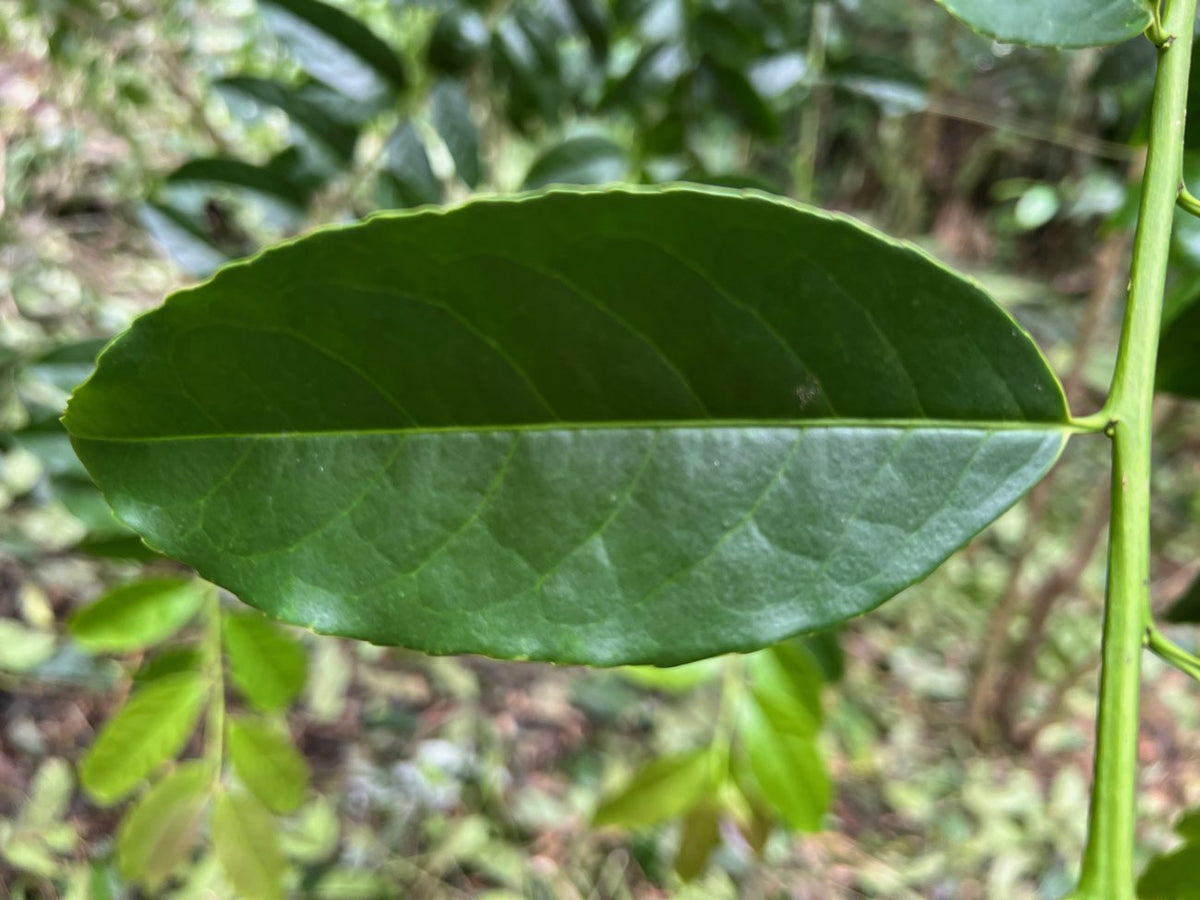
If you like both, there's a third caffeinated holly worth knowing. Guayusa (Ilex guayusa) grows in the Ecuadorian Amazon, where Kichwa families have shared it before dawn for generations. It's the strongest of the three: cultivated, dried guayusa leaves usually measure about 1.5–3.2% caffeine, and leaves from wild trees have been measured at up to about 7.6%. In flavor, it sits between its cousins: earthier and fuller than yaupon, smoother and less grassy than mate.
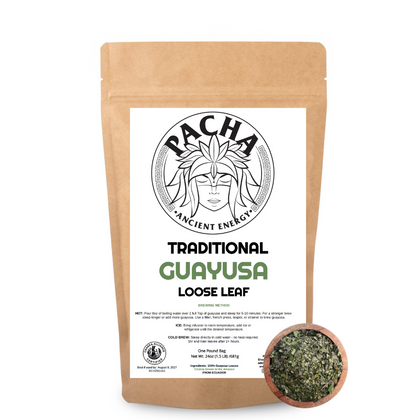
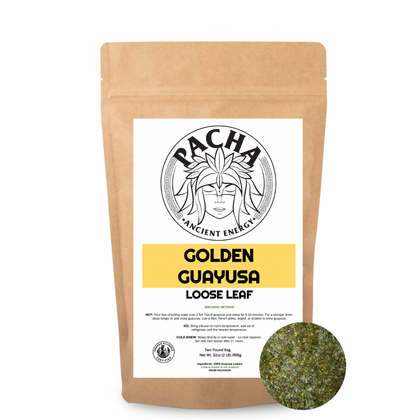
Our guayusa comes from small-scale farmers in Archidona, Napo, grown in chakra forest gardens, picked by hand and never smoked. Try our Traditional Guayusa Loose Leaf (about 66 mg of caffeine per 4 g), the everyday Guayusa Tea Bags – 100 Count or the smooth Golden Guayusa Tea Bags – 50 Count. Browse all our guayusa tea bags and loose leaf guayusa.
Keep reading: Guayusa vs Yerba Mate · Guayusa vs Yaupon · Yerba Mate vs Coffee
Frequently Asked Questions
Which has more caffeine, yaupon or yerba mate?
Yerba mate. Dried mate leaves usually contain about 1–2% caffeine, while dried yaupon leaves measure about 0.65–0.85%. Per cup, the amount depends on how much leaf you use and how you brew it.
Is yaupon the same as yerba mate?
No. Both are caffeinated hollies, but they're different species from different continents. Yaupon (Ilex vomitoria) is native to the southeastern United States; yerba mate (Ilex paraguariensis) grows in South America.
Which tastes better, yaupon or yerba mate?
It depends on what you like. Yerba mate is bold, grassy and sometimes smoky; yaupon is mild and smooth. If you want something in between, try guayusa, which is earthy and smooth with a gentle bitterness.
Is yaupon tea a good substitute for yerba mate?
If you want a milder cup with less caffeine, yes. If you want mate's strength without its grassy bitterness, guayusa may be a better match: it's a close holly cousin with more caffeine and a smoother taste.
What is the strongest caffeinated holly?
Guayusa. Cultivated, dried guayusa leaves usually measure about 1.5–3.2% caffeine, and leaves from wild trees have reached up to about 7.6%, compared with about 1–2% for yerba mate and 0.65–0.85% for yaupon.
Sources
- Rząsa-Duran E., et al. (2022). "Yerba Mate as a Source of Elements and Bioactive Compounds with Antioxidant Activity." Antioxidants 11(2):371 (citing Heck & De Mejia 2007 for 1–2% caffeine and 0.3–0.9% theobromine) — https://doi.org/10.3390/antiox11020371
- Heck C.I., De Mejia E.G. (2007). "Yerba Mate Tea (Ilex paraguariensis): A Comprehensive Review on Chemistry, Health Implications, and Technological Considerations." Journal of Food Science 72(9):R138-R151 — https://doi.org/10.1111/j.1750-3841.2007.00535.x
- Shufer V. "Yaupon Holly: A North American Plant Source of Caffeine." HerbalGram 109, American Botanical Council — https://www.herbalgram.org/resources/herbalgram/issues/109/table-of-contents/hg109-feat-yaupon/
- Palumbo M.J., Putz F.E., Talcott S.T. (2007). Oecologia 151(1):1-9 — https://doi.org/10.1007/s00442-006-0574-1
- Negrin A., et al. (2019). Journal of Agricultural and Food Chemistry 67(19):5687-5699 — https://doi.org/10.1021/acs.jafc.8b07168
- Noriega P., et al. (2025). Molecules 30(13):2837 — https://doi.org/10.3390/molecules30132837
- U.S. Food and Drug Administration, "Spilling the Beans: How Much Caffeine Is Too Much?" — https://www.fda.gov/consumers/consumer-updates/spilling-beans-how-much-caffeine-too-much
- USDA NRCS, Plant Fact Sheet: Yaupon (Ilex vomitoria) — https://plants.sc.egov.usda.gov/DocumentLibrary/factsheet/pdf/fs_ilvo.pdf
The Pacha Guayusa team