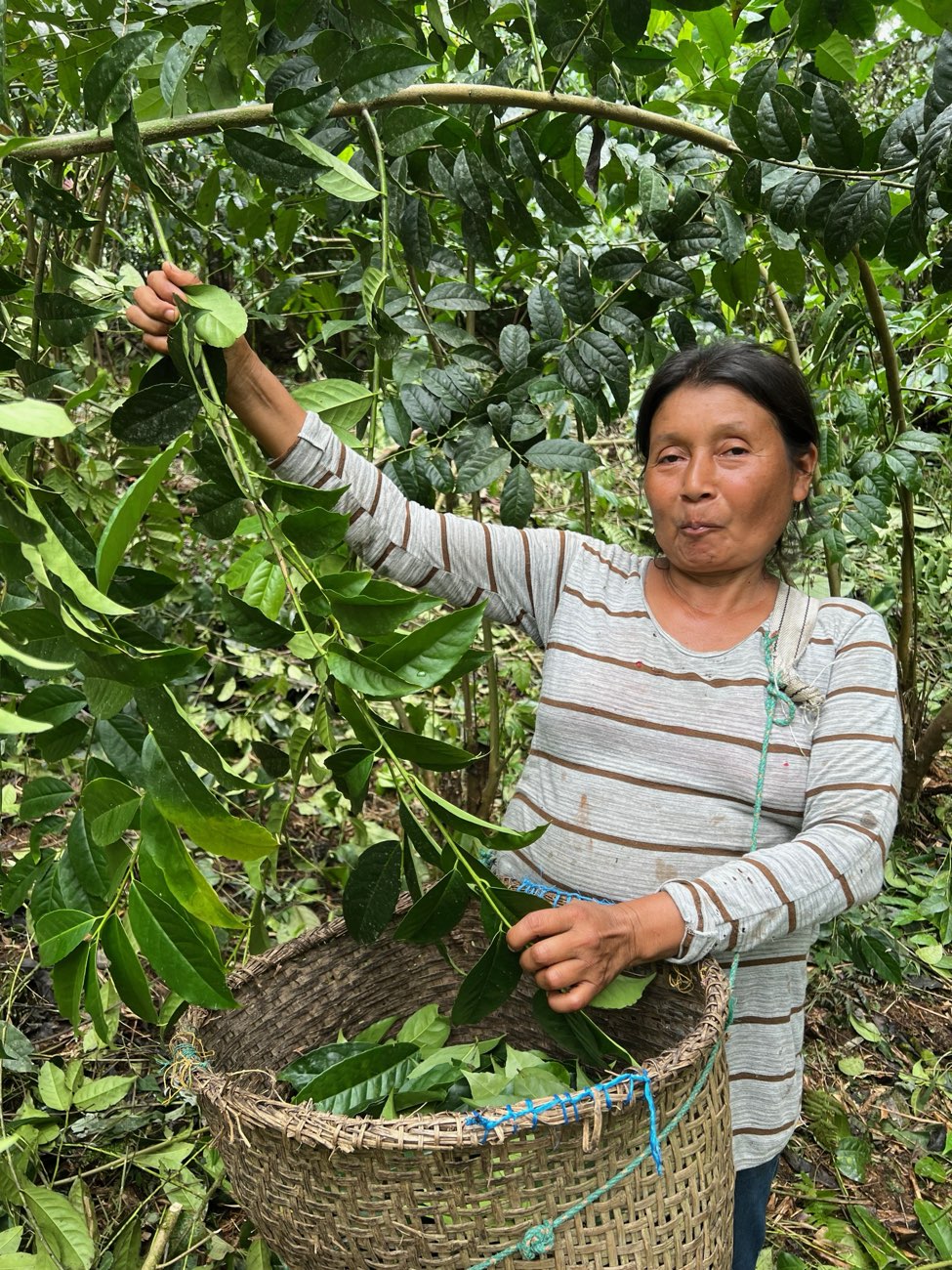
At a glance
- Guayusa (Ilex guayusa) grows in the Ecuadorian Amazon; yaupon (Ilex vomitoria) grows in the southeastern United States. Both are caffeinated hollies.
- Dried yaupon leaves measure about 0.65–0.85% caffeine; cultivated guayusa leaves about 1.5–3.2%, and wild guayusa leaves up to about 7.6%.
- Yaupon is usually described as mild and tea-like; guayusa is earthier, with more body.
- Both brew like tea, hot or iced, and neither is related to the tea plant.
Start here: everything about the leaf, from taste to caffeine to brewing, is in our guayusa tea guide.
Most people know only one caffeinated holly: yerba mate. But the holly family has at least two more members that people have brewed for centuries. In North America, it's yaupon. In the Ecuadorian Amazon, it's guayusa. They're close cousins, both naturally caffeinated and both brewed like tea, yet they come from opposite ends of the Americas and make quite different cups.
Here's how they compare.
Two hollies, two continents
Yaupon (Ilex vomitoria) is an evergreen shrub native to the coastal plains of the southeastern United States, from Virginia to Texas. Native American peoples brewed it long before coffee arrived, and today small producers are bringing it back as a homegrown American tea.
Guayusa (Ilex guayusa) is a tree native to the upper Amazon. In Ecuador, Kichwa families have brewed it before dawn for generations. Our guayusa comes from small-scale farmers in Archidona, Napo, who grow it in chakras: forest gardens where it shares the shade with fruit trees, food crops and native forest.
A 2019 chemical study of hollies analyzed guayusa, yerba mate and yaupon side by side and found that the caffeine-containing hollies are chemically close relatives. It also detected a rare compound, theacrine, at low levels in yaupon.
Comparison table
| Guayusa | Yaupon | |
|---|---|---|
| Plant | Ilex guayusa, a tree | Ilex vomitoria, a shrub |
| Origin | Upper Amazon (Ecuador) | Southeastern United States |
| Caffeine in dried leaf | ~1.5–3.2% cultivated; up to ~7.6% in wild trees | ~0.65–0.85% |
| Flavor | Earthy, smooth, light floral note, hint of sweetness | Often described as mild and tea-like |
| Tradition | Shared before dawn by Kichwa families | Brewed by Native peoples of the Southeast |
| How it's brewed | Hot, iced, cold brew; also powder and instant | Hot or iced, like tea |
Caffeine: guayusa leaf is much stronger
This is where the two differ most. Researchers at the University of Florida found that dry, unprocessed yaupon leaves contain about 0.65–0.85% caffeine. Guayusa is several times richer: cultivated, dried guayusa leaves usually measure about 1.5–3.2%, and leaves from wild guayusa trees have been measured at up to about 7.6%, among the highest levels ever reported for a leaf.
Growing conditions matter for both. In a study of pot-grown yaupon, plants given nitrogen fertilizer had 5 to 10 times more caffeine than unfertilized plants. Guayusa also varies from wild to cultivated trees and from harvest to harvest, which is why we always give our own figures as approximate.
In the cup, our guayusa has about 66 mg of caffeine per 4 g serving of Traditional loose leaf, about 41 mg in a 2.5 g tea bag and about 82 mg in a 5 g tea bag. For yaupon, caffeine per cup varies by brand and serving, so check the label. For reference, the FDA puts a 12 oz cup of brewed coffee at about 113–247 mg.
More on our numbers in How Much Caffeine Is in Guayusa?
Flavor and brewing
Yaupon is usually described as mild and smooth, closer to a light green or black tea. Guayusa has more body: earthy and rounded, with a pleasant bitterness, a light floral note and a natural hint of sweetness. Our guayusa is air-dried and never smoked, so what you taste is the leaf itself.
Both brew easily. For guayusa, pour 8 oz of boiling water over 2 full teaspoons of loose leaf or one tea bag and steep 5–10 minutes (5 for tea bags). It also makes excellent iced tea and cold brew. Step-by-step methods are in How to Make Guayusa Tea.
Which one should you choose?
- Choose yaupon if you want a mild, lower-caffeine cup and like supporting a native North American plant.
- Choose guayusa if you want a fuller, earthier cup with more caffeine per leaf, and an Amazonian tradition behind it.
Both are good reminders that "tea" doesn't have to come from the tea plant. If you're exploring the holly family, compare guayusa with its other cousin in Guayusa vs Yerba Mate, or see where it stands among all caffeinated drinks in Is There a Tea With More Caffeine Than Coffee?
Where to start with guayusa: our Traditional Guayusa Loose Leaf is the classic, bold cup; the Guayusa Tea Bags – 100 Count make an easy everyday cup; and the Golden Guayusa Tea Bags – 50 Count are our smoothest. Browse all our guayusa tea bags and loose leaf guayusa.
Keep reading: Guayusa vs Guarana · From Chakra to Cup · What Is Guayusa?
Frequently Asked Questions
Is guayusa the same as yaupon?
No. Both are caffeinated hollies, but they're different species from different places. Guayusa (Ilex guayusa) grows in the Ecuadorian Amazon, while yaupon (Ilex vomitoria) grows in the southeastern United States. Guayusa is usually earthier and fuller; yaupon is milder.
Which has more caffeine, guayusa or yaupon?
Guayusa. Dried yaupon leaves measure about 0.65–0.85% caffeine, while cultivated guayusa leaves usually measure about 1.5–3.2%, and leaves from wild guayusa trees up to about 7.6%. Caffeine varies with growing conditions for both plants.
Is yaupon tea strong?
Usually not. With about 0.65–0.85% caffeine in the dried leaf, yaupon is generally a milder cup than guayusa. If you want more caffeine from a holly, a 5 g guayusa tea bag has about 82 mg, close to a mild cup of coffee.
Is yaupon related to yerba mate and guayusa?
Yes. All three are hollies in the genus Ilex, and a 2019 chemical study found that the caffeine-containing hollies are close relatives. Each has its own flavor and caffeine level.
Can I brew guayusa like yaupon?
Yes. Both brew like tea. For guayusa, steep 2 full teaspoons of loose leaf or one tea bag in 8 oz of boiling water for 5–10 minutes, or cold-brew it in the fridge for 2+ hours.
Sources
- Shufer V. "Yaupon Holly: A North American Plant Source of Caffeine." HerbalGram 109, American Botanical Council (citing University of Florida research: 0.65–0.85% caffeine in dry yaupon leaves) — https://www.herbalgram.org/resources/herbalgram/issues/109/table-of-contents/hg109-feat-yaupon/
- Palumbo M.J., Putz F.E., Talcott S.T. (2007). "Nitrogen fertilizer and gender effects on the secondary metabolism of yaupon, a caffeine-containing North American holly." Oecologia 151(1):1-9 — https://doi.org/10.1007/s00442-006-0574-1
- Negrin A., Long C., Motley T.J., Kennelly E.J. (2019). "LC-MS Metabolomics and Chemotaxonomy of Caffeine-Containing Holly (Ilex) Species and Related Taxa in the Aquifoliaceae." Journal of Agricultural and Food Chemistry 67(19):5687-5699 — https://doi.org/10.1021/acs.jafc.8b07168
- Noriega P., et al. (2025). "Guayusa (Ilex guayusa Loes.) Ancestral Plant of Ecuador." Molecules 30(13):2837 — https://doi.org/10.3390/molecules30132837
- Meneses M.Á., et al. (2024). "Green Processing of Ilex guayusa." Molecules 29(22):5309 — https://doi.org/10.3390/molecules29225309
- U.S. Food and Drug Administration, "Spilling the Beans: How Much Caffeine Is Too Much?" — https://www.fda.gov/consumers/consumer-updates/spilling-beans-how-much-caffeine-too-much
- USDA NRCS, Plant Fact Sheet: Yaupon (Ilex vomitoria) — https://plants.sc.egov.usda.gov/DocumentLibrary/factsheet/pdf/fs_ilvo.pdf