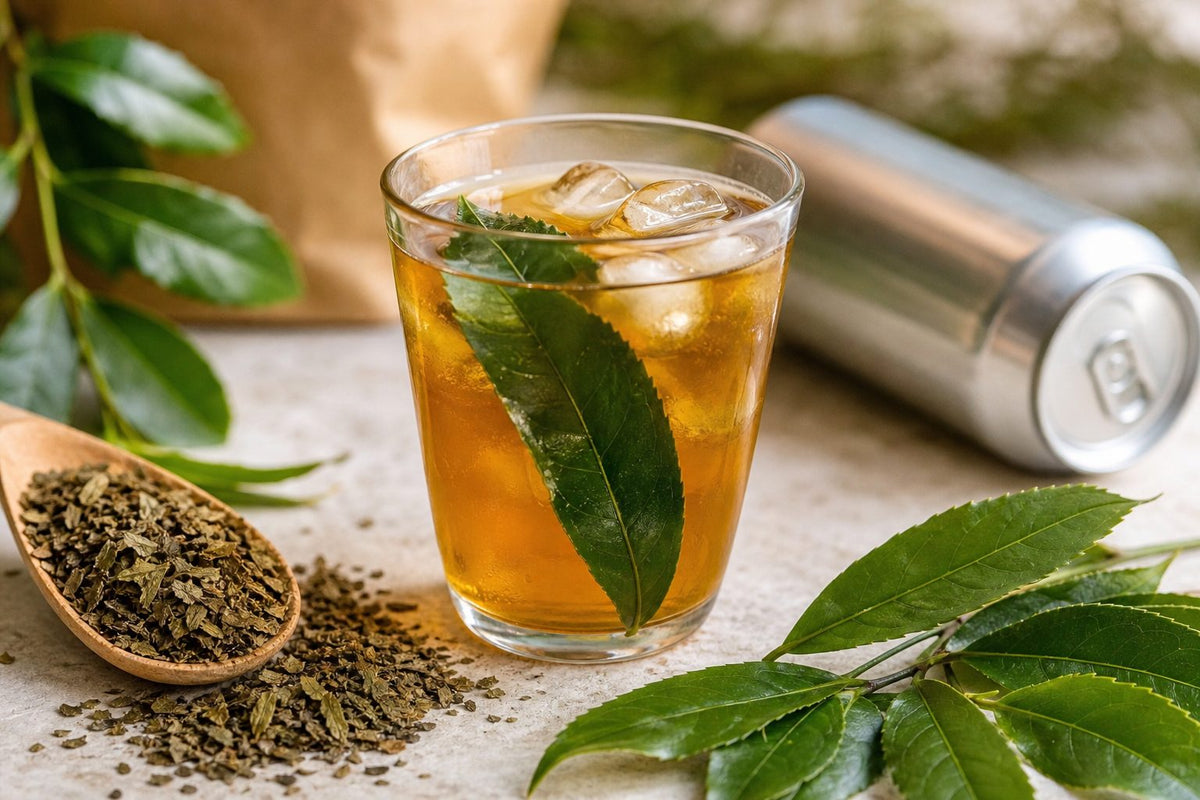
At a glance
- The FDA puts energy drinks at about 41–246 mg of caffeine per 12 oz, and 54–328 mg per 16 oz can.
- Caffeine is the same molecule whether it comes from a leaf or a lab. The difference is everything else in the drink, and how well you know your dose.
- A cup of PACHA guayusa ranges from ~22 mg (Green tea bag) to ~82 mg (5 g tea bag), with nothing added.
- Instant Guayusa Pure makes a cold, can-style drink in 30 seconds: 1/4 tsp, about 60 mg.
Start here: everything about the leaf, from taste to caffeine to brewing, is in our guayusa tea guide.
Energy drinks are built for the 2 p.m. slump, the long drive and the workout you don't feel like starting. They're cold, fast and everywhere. But for many people the daily can comes with more sugar, more ingredients and sometimes more caffeine than they realized.
If that sounds familiar, you're probably looking for energy drink alternatives that keep the cold, grab-and-go part and lose the rest. This guide compares guayusa vs energy drinks honestly: what's in a typical can, what "natural caffeine" really means, and how to make a cold guayusa drink that can take the can's place.
Full disclosure: we're PACHA, and we sell guayusa. We'll show you the numbers and let you decide.
What's in a typical energy drink?
There's no single recipe. The FDA notes that "energy drink" is a name the food industry created, with no FDA regulation specific to the category. Still, most cans share a few building blocks.
Caffeine: a wide range
According to the FDA, energy drinks generally contain 54–328 mg of caffeine per 16 oz, and some brands contain 41–246 mg per 12 oz. That's a huge spread. At the low end, a can is similar to a cup of tea. At the high end, one can approaches the caffeine in several cups of coffee.
Most U.S. energy drinks list the total caffeine from all sources on the label, including ingredients like guarana that also contain caffeine. That label is your best friend.
Sugar or sweeteners
Many energy drinks are sweetened with sugar; "zero sugar" versions usually use non-nutritive sweeteners instead. Either way, a can often tastes more like a soda than an everyday drink.
The "energy blend"
Labels often list extras such as taurine, B vitamins, guarana, ginseng or other botanicals, plus flavors, colors and acids. We won't make claims about any of them. Our point is simpler: the more ingredients, the more carefully you need to read the label.
Not for kids
The FDA, citing the American Academy of Pediatrics, says medical experts advise against energy drinks for children and teens because of their sugar and caffeine levels.
Natural caffeine vs synthetic caffeine: what's the real difference?
This is where a lot of marketing gets loose, so let's be careful.
The caffeine molecule is the same. Caffeine made in a lab and caffeine in a tea leaf are chemically identical. The FDA says there's no difference in how your body handles caffeine, or in its safety, whether it occurs naturally in coffee and tea or is added to a product. So "natural caffeine" is not a magic word.
The real differences are elsewhere:
1. What comes with it. A leaf is never only caffeine. Guayusa also contains a little theobromine (the compound in cacao), chlorogenic acids and other polyphenols, according to a scientific review by Wise and Negrin. Guayusa is also commonly described as containing L-theanine, the amino acid tea drinkers know well. A 2019 review by Schuster and Mitchell looked at natural caffeine sources, including guayusa, yerba mate, tea, coffee and cocoa. It concluded that compounds such as polyphenols, theobromine and L-theanine appear to enhance caffeine's effects on mood and attention and soften some of its negative effects, while noting that more research is needed. That's an interesting lead, not proof. Research on guayusa in people is still limited.
2. Dose control. With pure caffeine powder, the margin for error is tiny. The FDA estimates that toxic effects, like seizures, can occur with rapid consumption of around 1,200 mg of caffeine, which is less than half a teaspoon of pure caffeine. Brewing a leaf is a different situation: the caffeine is spread through the plant material, and a cup releases a moderate amount. You still need to count it, but it's much harder to overshoot by accident.
3. What's added on top. A cup of 100% guayusa is leaf and water. A can usually adds sweeteners, flavors and an ingredient blend. Neither is "good" or "bad" by default; the question is what you want in your daily routine.
So when people search for a natural energy drink, the honest answer is: look for caffeine you can measure, from a source with as few additions as you're comfortable with.
Guayusa vs energy drinks: side by side
| Typical energy drink | Guayusa (PACHA) | |
|---|---|---|
| Caffeine | ~41–246 mg per 12 oz; ~54–328 mg per 16 oz (FDA) | ~22 mg (Green tea bag) to ~82 mg (5 g tea bag); Instant ~60 mg per 1/4 tsp |
| Source of caffeine | Added caffeine, sometimes plus guarana or other botanicals | The guayusa leaf itself |
| Sugar / sweeteners | Usually sugar or non-nutritive sweeteners | None added (add your own if you like) |
| Other ingredients | Often taurine, B vitamins, flavors, colors, acids | 100% guayusa leaf |
| Dose control | Fixed per can; read the label | You choose: bag size, steep time, scoop |
| Format | Cold, ready to drink | Hot, iced, cold brew or instant |
| Convenience | Highest: just open it | High with Instant; a little planning for cold brew |
Energy drinks win on convenience; guayusa wins on simplicity and choosing your own strength. For a closer look at the numbers, see how much caffeine is in guayusa.
How it feels: what drinkers describe
Many guayusa drinkers describe its lift as steadier and smoother: alert and focused, without the sharp spike some people notice with a big, fast can. That's a common description, not a promise. Everyone responds to caffeine differently, and how you feel also depends on how much you have, how fast you drink it, whether you've eaten and how well you slept.
One practical difference matters more than any compound: you tend to sip a cup of tea, and you can choose its strength. A 1.5 g Green tea bag (~22 mg) and a 5 g bag (~82 mg) are very different drinks, and you decide which one fits the moment.
How to make a cold guayusa "can replacement"
The hardest part of quitting the can is the cold, ready-when-you-are format. Here are three ways to recreate it.
Option 1: Instant Guayusa Pure (30 seconds)
The closest thing to cracking a can. Instant Guayusa Pure is 100% guayusa in instant form, with no sugar or flavors added.
- Add 1/4 teaspoon (about 1 g) to 8 oz of cold water.
- Stir or shake for about 30 seconds.
- Add ice, a squeeze of lemon or lime, or a splash of sparkling water if you miss the fizz.
That's about 60 mg of caffeine, at the low end of the FDA's range for energy drinks. It travels well in a shaker or water bottle.
Option 2: Iced guayusa from tea bags
- Steep one Guayusa Tea Bag (50 ct, 5 g) in 8 oz of hot water for about 5 minutes (longer for a stronger cup).
- Let it cool to room temperature.
- Pour over ice or keep it in the fridge.
Each 5 g bag has about 82 mg of caffeine. Brew several at once and keep a pitcher in the fridge for the week. For a lighter afternoon option, use Green Guayusa Tea Bags (100 ct) at about 22 mg per bag.
Option 3: Cold brew guayusa (overnight)
- Put guayusa leaf or tea bags straight into cold water. No heat needed.
- Stir and leave it in the fridge for 2 hours or more.
- Strain and drink.
Set it up at night and it's ready in the morning. Strength depends on how much leaf you use and how long you steep it, so start with one bag per glass and adjust. Our guide to making guayusa tea covers every method in detail.
Make it feel like a treat: top it with sparkling water, add citrus or mint, or sweeten lightly so you control how much.
Healthy energy drink alternatives: other options
Guayusa isn't the only swap. Unsweetened iced tea, yerba mate and matcha are all caffeinated alternatives with their own flavors and rituals. We compare them in our roundup of coffee alternatives with caffeine. Whatever you choose, the same rule applies: know roughly how much caffeine you're getting.
How much caffeine is too much?
The FDA cites 400 mg a day as an amount not generally associated with negative effects for most adults, while noting that people vary widely in how sensitive they are. Count every source: coffee, tea, soda, energy drinks, chocolate and supplements.
If you're pregnant, trying to become pregnant or breastfeeding, take medication, have a heart condition or are sensitive to caffeine, talk to your doctor before changing your routine. For children and teens, talk to their doctor before offering any caffeinated drink, guayusa included. Read more in is guayusa safe?
Try a simpler kind of energy
If you're ready to try life after the can, start with Instant Guayusa Pure for the cold, 30-second version and the Guayusa Tea Bags (50 ct) for a pitcher of iced guayusa. Every bag is 100% guayusa leaf, hand-picked by small-scale farmers in Archidona, in Ecuador's Napo province, air-dried and never smoked.
For a cold drink you can make in minutes, start with our guayusa tea bags, or batch a pitcher with our loose leaf guayusa.
Keep reading: Guayusa vs Guarana · Iced Guayusa Recipes With Fresh Fruit · The Best Tea for Focus
Frequently Asked Questions
Is guayusa better than energy drinks?
It depends on what you want. Guayusa gives you caffeine from the leaf itself, with nothing added, and you choose the strength: from about 22 mg (Green tea bag) to about 82 mg (5 g tea bag). Energy drinks range from about 41 to 246 mg per 12 oz (FDA) and usually include sweeteners and other ingredients. Guayusa wins on simplicity; cans win on pure convenience.
Is natural caffeine better than synthetic caffeine?
The molecule is identical, and the FDA says your body handles natural and added caffeine the same way. The differences are what comes with it and how easy it is to control the dose. Leaves like guayusa also contain polyphenols and a little theobromine. A 2019 review suggests such compounds may modulate caffeine's effects, but more research is needed.
How much caffeine is in Instant Guayusa Pure?
About 60 mg of caffeine per 1/4 teaspoon (about 1 g), stirred into 8 oz of cold or hot water for around 30 seconds. Each 30 g pack holds about 30 servings. Like all natural products, caffeine varies slightly from batch to batch, so treat it as an approximate figure. You can use a little less for a lighter drink.
Will guayusa give me the same crash as an energy drink?
Many drinkers describe guayusa as a steadier, smoother lift than a big, fast can, often because they sip it slowly and choose a moderate strength. That's an experience people report, not a guarantee. Everyone responds to caffeine differently, and sleep, food and total daily caffeine all play a part. Start small and see how it feels for you.
Can teenagers drink guayusa instead of energy drinks?
Guayusa contains caffeine, so the same caution applies. The FDA notes that medical experts advise against energy drinks for children and teens, and recommends water and unsweetened milk as their main drinks. Talk to your child's doctor about caffeine for teens. For adults who are pregnant, on medication or have a heart condition, check with a doctor too.
Sources
- U.S. Food and Drug Administration, "Spilling the Beans: How Much Caffeine Is Too Much?" (content current as of 08/28/2024) — https://www.fda.gov/consumers/consumer-updates/spilling-beans-how-much-caffeine-too-much
- Schuster J., Mitchell E.S. (2019). "More than just caffeine: psychopharmacology of methylxanthine interactions with plant-derived phytochemicals." Progress in Neuro-Psychopharmacology and Biological Psychiatry 89:263-274 — https://doi.org/10.1016/j.pnpbp.2018.09.005
- Wise G., Negrin A. (2020). "A critical review of the composition and history of safe use of guayusa." Critical Reviews in Food Science and Nutrition 60(14):2393-2404 — https://doi.org/10.1080/10408398.2019.1643286